
Custom Wall Panel Upholstery Process
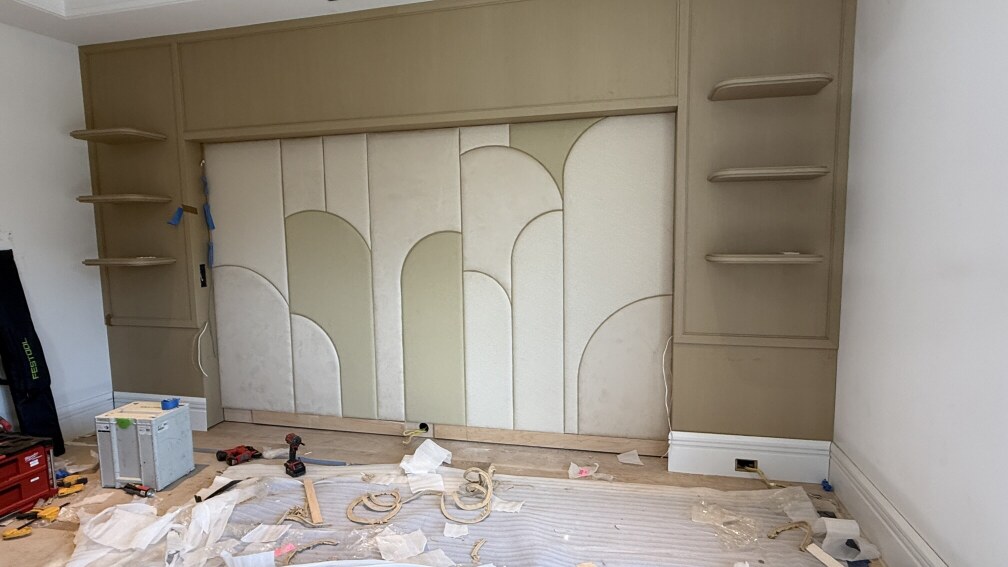
Custom wall panel upholstery transforms prepared structural substrates into finished architectural surfaces through foam preparation, fabric wrapping, leather application, sewing, and hand-finished detailing.
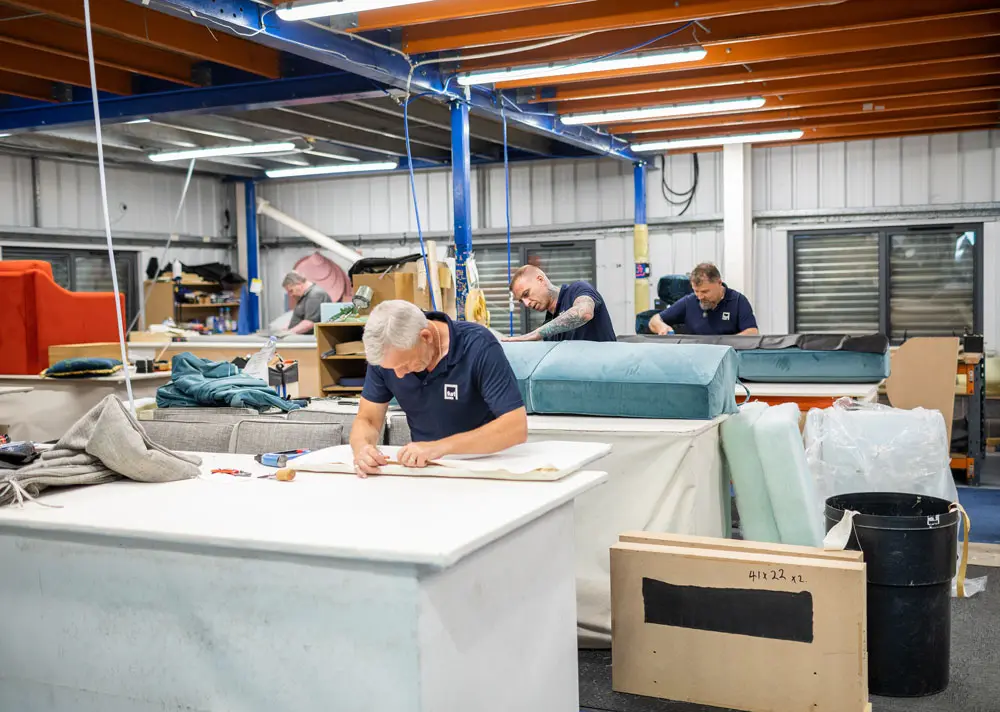
At First Class MasterCraft, upholstered wall-panel components are finished through our Fort Lee, New Jersey upholstery workshop, where craftsmen work with designer textiles, leather, padding materials, and architectural upholstery specifications.
Our upholstery process supports residential, hospitality, and commercial wall-panel projects throughout New York City, New Jersey, and the Tri-State Area.
Each project is developed around the specified panel dimensions, materials, padding profiles, seam locations, architectural details, and installation requirements.
For an overview of the complete production sequence, visit our Custom Wall Panel Manufacturing & Builder Process.
Architectural Wall Panel Upholstery Capabilities
Wall-panel upholstery requires coordination between the underlying structural components and the finished textile or leather surface.
Our Fort Lee upholstery workshop supports a range of architectural upholstery techniques, depending on the project design and material specifications.
Capabilities include:
- Fabric wrapping and application
- Leather wall-panel upholstery
- Foam preparation and shaping
- Padding and cushioning assemblies
- Channel upholstery
- Decorative stitching
- Fabric pattern alignment
- Architectural seam placement
- Upholstered edge finishing
- Curved upholstered components
- Acoustic fabric application
- Final detailing and inspection
The upholstery method is selected according to the panel geometry, material characteristics, finished appearance, and project requirements.
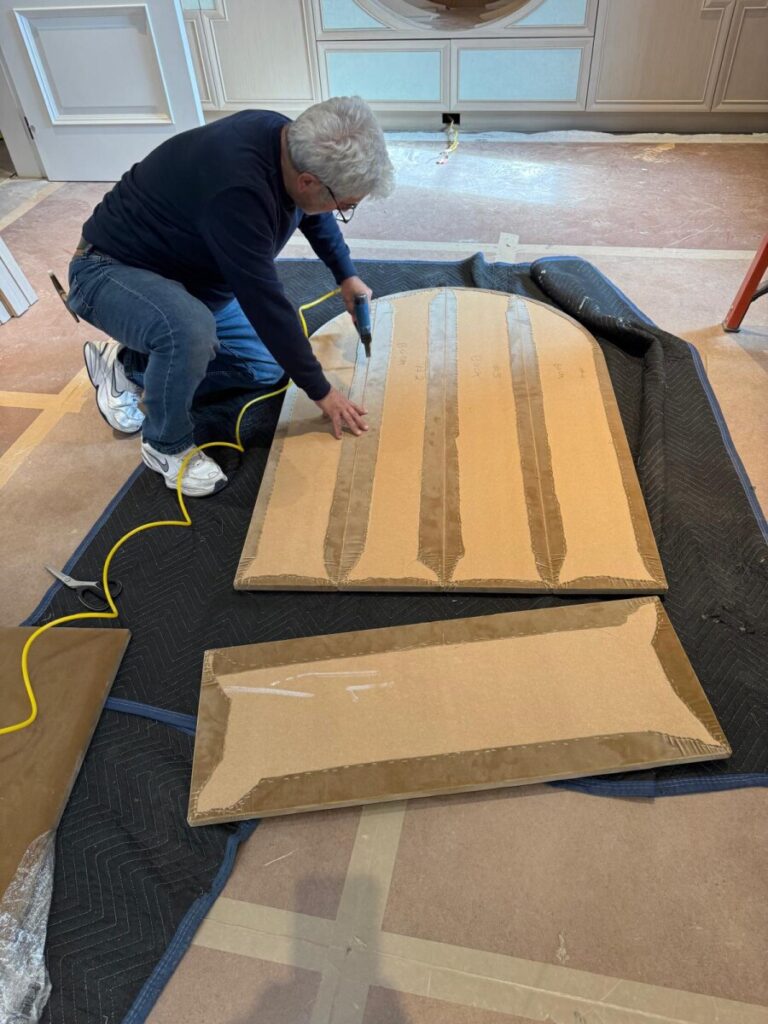
Step 1 — Preparing Wall Panel Substrates for Upholstery
The upholstery process begins with reviewing the prepared panel substrates and the requirements of the finished wall system.
Substrates may arrive from structural fabrication with predetermined dimensions, profiles, mounting provisions, and architectural openings.
Before upholstery begins, the relevant construction details are reviewed to accommodate padding, material wrapping, seams, and edge treatments.
Substrate & Upholstery Preparation
- Reviewing panel dimensions
- Checking prepared substrate profiles
- Confirming upholstery allowances
- Reviewing panel edges and corners
- Identifying architectural openings
- Planning material orientation
- Reviewing seam and channel layouts
- Coordinating finished panel thickness
Structural substrate fabrication is addressed separately in our Wall Panel Frame Construction page.
Step 2 — Foam Preparation & Architectural Padding
Padding influences the finished appearance, surface profile, and tactile characteristics of upholstered wall panels.
Different designs may require flat padding, raised profiles, sculpted foam shapes, or layered upholstery assemblies.
The appropriate materials and thicknesses depend on the intended design and functional requirements.
Foam & Padding Options
- Flat upholstered padding
- High-density foam options
- Layered padding assemblies
- Raised architectural profiles
- Channel padding
- Curved foam components
- Soft upholstered borders
- Project-specific acoustic padding
Padding must be coordinated with the panel dimensions and intended surface treatment to achieve the specified finished profile.
Step 3 — Fabric Wrapping & Textile Application
Fabric wrapping is a central part of architectural wall-panel upholstery.
The selected textile is prepared and applied around the panel according to its dimensions, padding, edge details, and specified appearance.
Material characteristics such as width, stretch, thickness, pattern repeat, nap direction, and backing can influence the upholstery method.
Fabric Upholstery Considerations
- Fabric width and available yardage
- Pattern repeat and direction
- Material stretch
- Nap and pile orientation
- Padding thickness
- Corner wrapping
- Edge finishing
- Panel-to-panel material continuity
- Concealed attachment requirements
Our workshop works with project-specified fabrics, performance textiles, velvet, linen, suede-style materials, and COM — Customer’s Own Material — subject to suitability for the intended use.
For information about finished fabric-panel designs and applications, visit our Fabric-Wrapped Wall Panels page.
Step 4 — Leather Wall Panel Upholstery
Leather upholstery introduces additional material considerations because natural hides vary in dimensions, grain, thickness, and surface characteristics.
The upholstery process may require careful hide selection, panel layout, seam planning, and coordination between adjoining surfaces.
Leather Upholstery Techniques
- Leather layout and preparation
- Material selection and inspection
- Decorative stitching
- Architectural seam placement
- Channel upholstery
- Upholstered edge detailing
- Curved leather application
- Panel-to-panel material coordination
The selected leather and upholstery construction must be appropriate for the specified panel geometry and application.
Explore the finished design options on our Leather Wall Panels page.
Step 5 — Channel Upholstery & Decorative Sewing
Architectural wall panels may incorporate vertical, horizontal, diagonal, or project-specific channel layouts.
Channel upholstery requires coordination between the underlying padding, fabric or leather dimensions, sewing details, and panel divisions.
Channel & Sewing Capabilities
- Vertical channel upholstery
- Horizontal channel upholstery
- Wide upholstered channels
- Narrow channel profiles
- Decorative seam placement
- Top stitching
- Double stitching
- Contrast stitching
- Custom textile layouts
- Project-specific upholstered patterns
Sewing and channel configurations are planned around the visual proportions and construction requirements of the finished installation.
Upholstery for Acoustic Wall Panel Assemblies
Some architectural wall-panel systems incorporate acoustic materials intended to help absorb reflected sound and manage room reverberation.
For these applications, upholstery materials must be compatible with the intended acoustic assembly.
Depending on the specified system, considerations may include:
- Acoustic core compatibility
- Fabric permeability
- Material thickness
- Padding configuration
- Panel depth
- Fabric wrapping method
- Mounting conditions
- Required air gaps
Acoustic performance depends on the complete assembly rather than the upholstery material alone.
Where acoustic performance ratings are required, they should be based on suitable testing or manufacturer documentation for the relevant materials or assemblies.
For finished acoustic solutions, visit our Acoustic Wall Panels page.
Upholstering Curved & Geometric Wall Panel Components
Nonstandard panel geometry can create additional upholstery requirements, particularly around curves, angles, sculpted surfaces, and dimensional transitions.
These projects may require project-specific padding, seam placement, fabric orientation, and material application methods.
Architectural Upholstery Applications
- Curved upholstered panels
- Radius wall sections
- Arched panel surfaces
- Angled geometric components
- Dimensional upholstered profiles
- Soft architectural transitions
- Channelled curved panels
- Mixed-material upholstered sections
The upholstery approach depends on the geometry and characteristics of the selected materials.
Shaped structural components and routed substrates are prepared through the relevant fabrication stages before upholstery.
For that manufacturing process, visit our Wall Panel CNC Fabrication page.
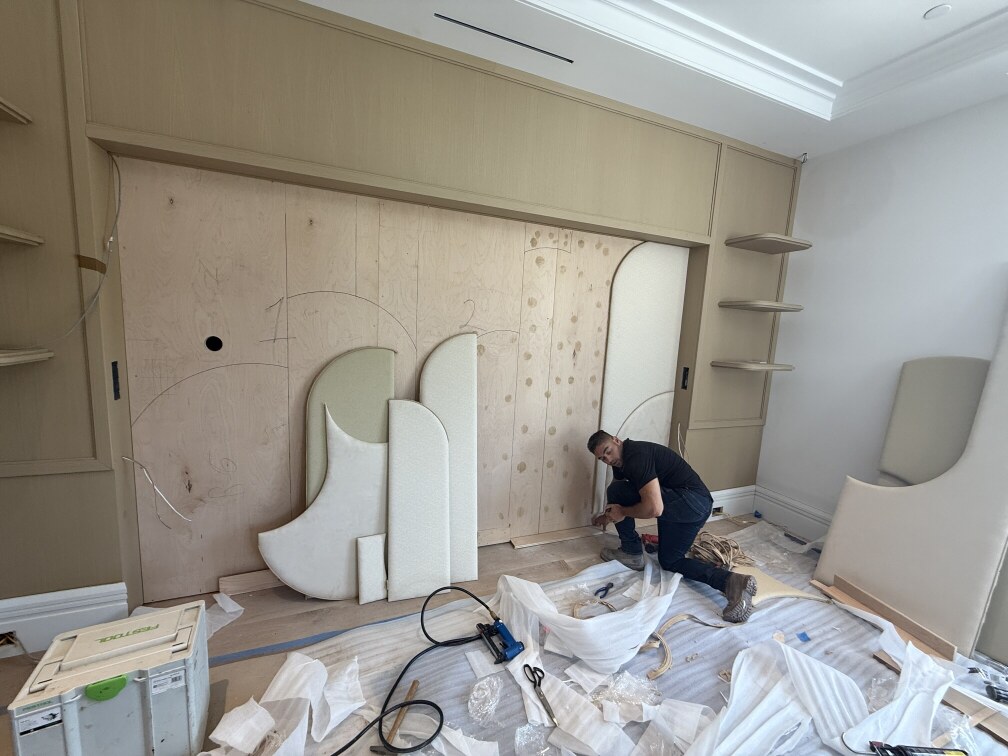
Modular Upholstery for Large Wall Panel Systems
Large architectural wall systems may consist of multiple upholstered sections designed to form a coordinated installation.
Modular upholstery requires attention to the relationship between adjacent panel surfaces.
Considerations can include:
- Fabric orientation
- Pattern continuity
- Seam placement
- Channel spacing
- Padding thickness
- Finished panel dimensions
- Edge transitions
- Panel identification
- Installation sequence
This approach is particularly useful for large residential installations, NYC apartments with difficult access, and multi-panel commercial projects.
Commercial & Hospitality Wall Panel Upholstery
Our upholstery workshop supports designer-specified wall-panel projects for residential, hospitality, office, retail, and other commercial environments.
Applications may include:
- Hotel guest-room wall panels
- Hospitality headboard walls
- Hotel lobby installations
- Office acoustic panels
- Conference-room wall systems
- Restaurant interiors
- Retail feature walls
- Reception-area panels
- Multi-unit residential projects
Commercial upholstery specifications may include material performance, cleanability, pattern consistency, panel dimensions, and applicable fire-performance requirements.
Material and assembly compliance must be evaluated according to the particular project specifications and relevant requirements.
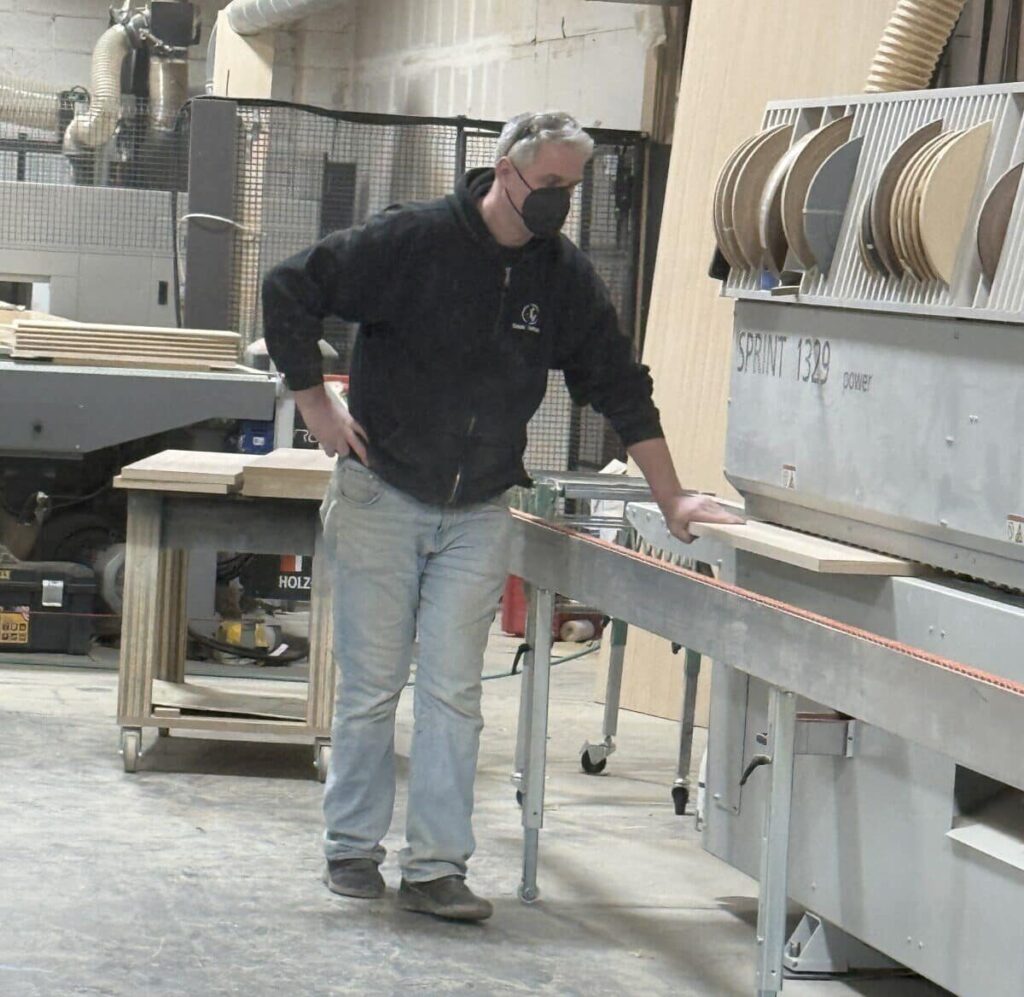
Architectural Wall Panel Upholstery in Fort Lee, NJ
Final Upholstery Detailing & Quality Review
Before finished panels proceed to the next project stage, their upholstery and detailing are reviewed against the relevant specifications.
Depending on the design, the review may include:
- Fabric orientation
- Leather surface condition
- Seam placement
- Channel layout
- Padding profile
- Upholstered corners
- Edge finishing
- Panel identification
- Finished dimensions
- Visible upholstery details
Any required adjustments are addressed according to the project scope before the panels are prepared for delivery or installation.
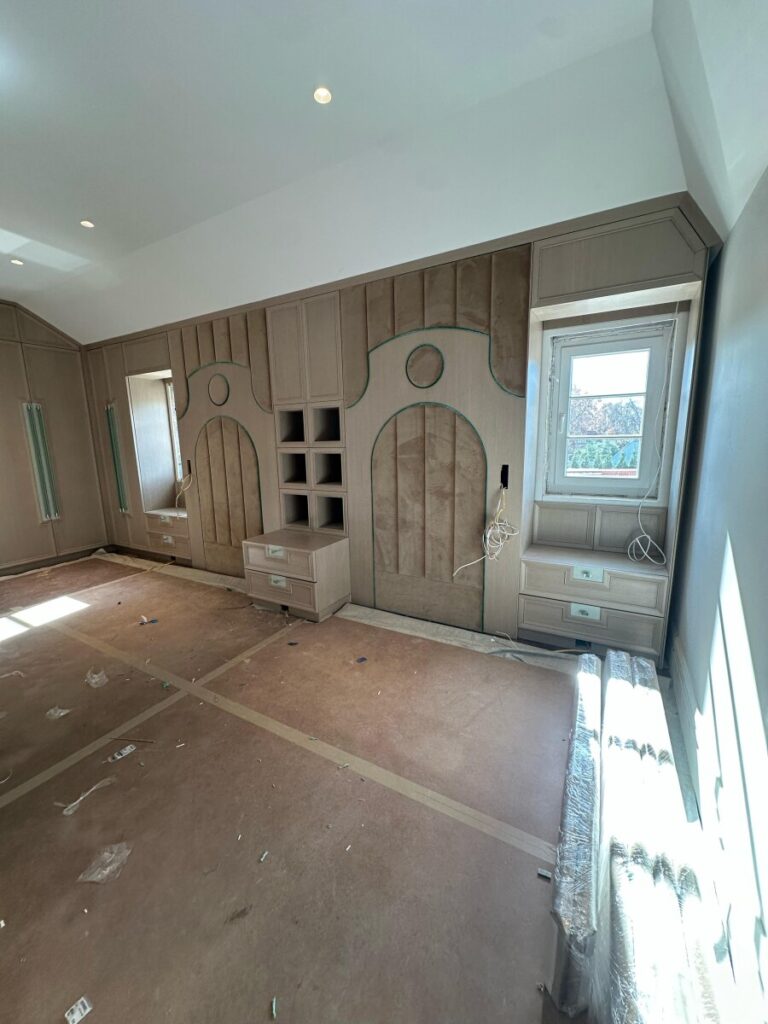
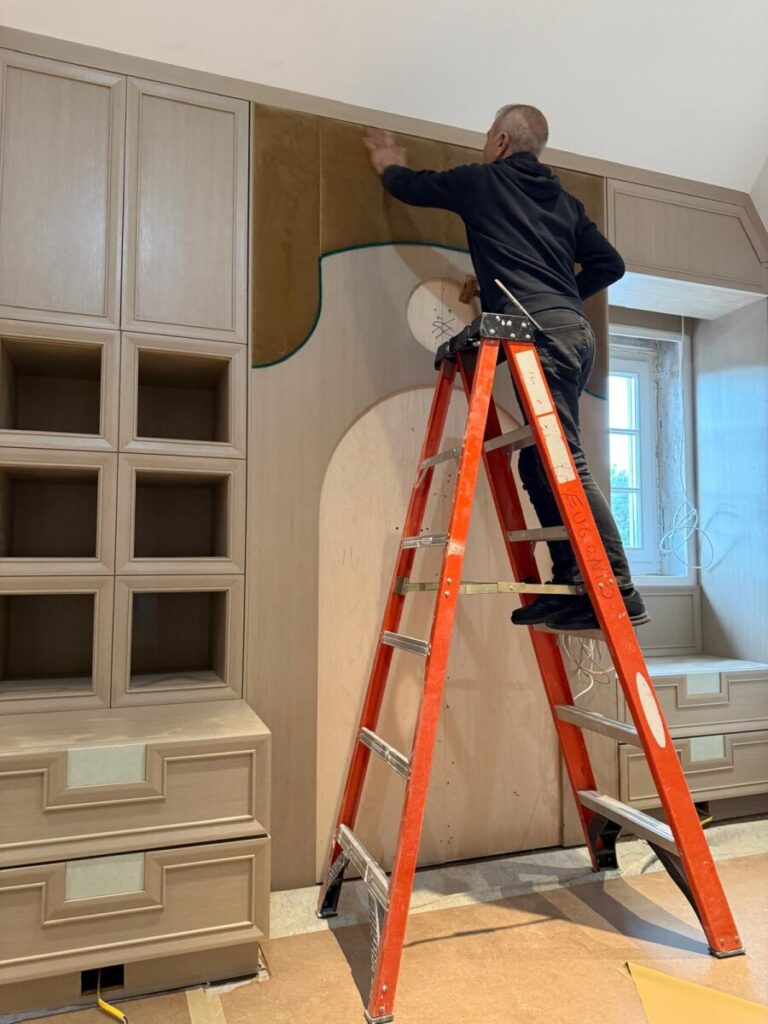
Wall Panel Upholstery in Progress
Next Step — Wall Panel Installation
Start Your Custom Wall Panel Upholstery Project
Send us your architectural drawings, panel dimensions, upholstery specifications, fabric or leather selections, and project requirements.
Our team can review material suitability, padding profiles, seam layouts, upholstery detailing, and coordination with the broader wall-panel manufacturing process.
Every custom project we build is backed by our formal Warranty & Service Policy, reflecting the same precision, integrity, and craftsmanship standards we apply in our workshop.
Or Reach Us Directly
Call: 201‑944‑2282
Email: info@firstclassmastercraft.com
Visit:
2431 Lemoine Ave, Fort Lee, NJ 07024