
Custom Bed Upholstery Process
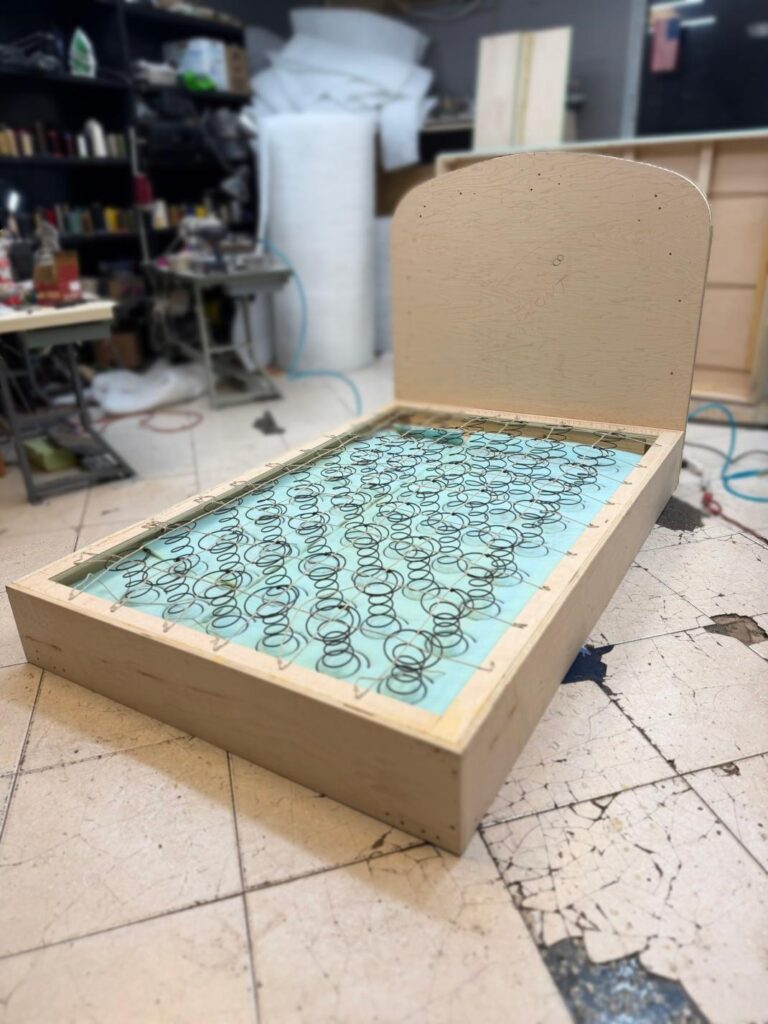
Bed upholstery is the stage where the structural frame becomes a finished, tailored piece.
At First Class MasterCraft, custom bed components are upholstered in our Fort Lee workshop using carefully selected foam profiles, batting, fabrics, leathers, sewing techniques, and hand-finished detailing. The upholstery process is coordinated with the underlying structure so finished dimensions, seams, curves, attachment points, and architectural alignments remain accurate.
This page explains how we upholster custom bed components after structural fabrication is complete.
Upholstery Planned Around the Structure
Bed upholstery begins before fabric is ever cut.
The underlying frame must already account for the thickness of foam, batting, fabric, leather, seams, welt, channeling, tufting, and other decorative details.
Before upholstery begins, we review:
- Finished bed dimensions
- Headboard and rail thickness
- Foam depth
- Fabric or leather specification
- Seam placement
- Welt or piping details
- Tufting or channel layouts
- Curved or radiused profiles
- Mattress clearances
- Installation and access requirements
This coordination helps ensure that the finished upholstered components match the intended dimensions of the project.
Foam Engineering & Padding Profiles
Foam selection affects both the appearance and feel of an upholstered bed.
Different parts of the bed may require different foam densities, thicknesses, and edge treatments depending on the design.
Foam Applications May Include
- Headboard padding
- Upholstered side rails
- Footboards
- Wing profiles
- Curved components
- Channel panels
- Architectural upholstered sections
Foam can be shaped to create crisp edges, rounded profiles, deep padding, soft transitions, or sculpted forms.
The objective is to create the correct finished silhouette while maintaining a stable upholstery surface.
Fabric & Leather Preparation
Each material behaves differently during upholstery.
Linen, velvet, wool, performance fabric, leather, and designer textiles each require different handling, cutting, tension, seam placement, and pattern coordination.
Materials may include:
- Linen
- Velvet
- Wool
- Performance fabrics
- Full-grain leather
- Faux leather
- Designer textiles
- COM — Customer’s Own Material
Cutting, Sewing & Pattern Alignment
Accurate cutting and sewing are essential on large upholstered bed components.
Fabric panels must be prepared so seams remain straight, patterns align correctly, and finished dimensions remain consistent across the headboard, rails, footboard, and other upholstered sections.
Sewing Details Can Include
- Straight seams
- French seams
- Top stitching
- Double stitching
- Welt
- Contrast welt
- Decorative borders
- Banding
- Panel seams
- Pattern matching
Welt, Piping & Decorative Edge Details
Welt and piping can be used to define the outline of upholstered components.
Depending on the design, these details may be:
- Self-welt
- Contrast welt
- Double welt
- Leather welt
- Fabric piping
Edge details are positioned according to the shape of the frame and the desired finished appearance.
They may be used around headboards, rails, footboards, wings, or panel sections.
Tufting & Button Work
Tufting requires accurate layout before upholstery begins.
Button locations, spacing, depth, and pattern must be established across the upholstered surface so the finished design remains balanced.
Tufting options may include:
- Diamond tufting
- Square tufting
- Biscuit tufting
- Deep button tufting
- Shallow tailored tufting
Channel Upholstery
Channel upholstery creates repeated vertical, horizontal, or geometric padded sections.
Channel dimensions must be coordinated with the total width and height of the component so the pattern finishes symmetrically.
Applications can include:
- Vertical channels
- Horizontal channels
- Wide architectural channels
- Narrow tailored channels
- Curved channel layouts
- Geometric upholstered patterns
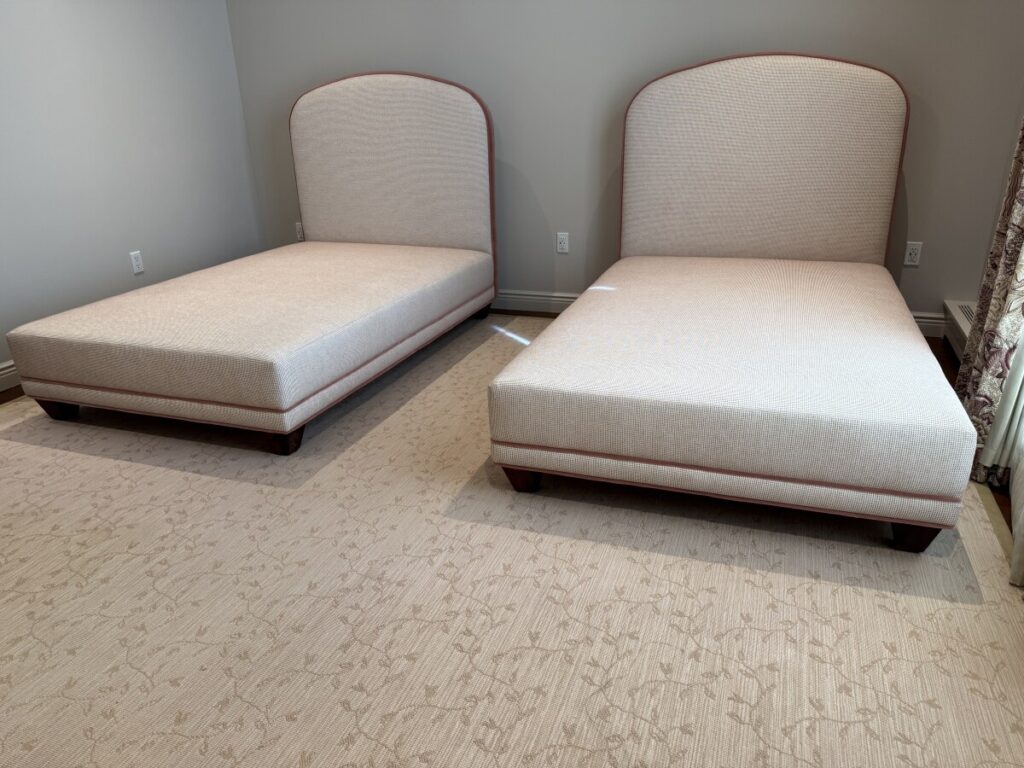
Upholstering Curved & Sculpted Components
Curved beds and architectural headboards require a different upholstery approach from simple rectangular frames.
Fabric and leather must follow the geometry of the underlying structure without unwanted folds, distortion, or inconsistent tension.
We upholster components such as:
- Arched headboards
- Curved wings
- Rounded bed rails
- Sculpted footboards
- Radiused corners
- Geometric upholstered panels
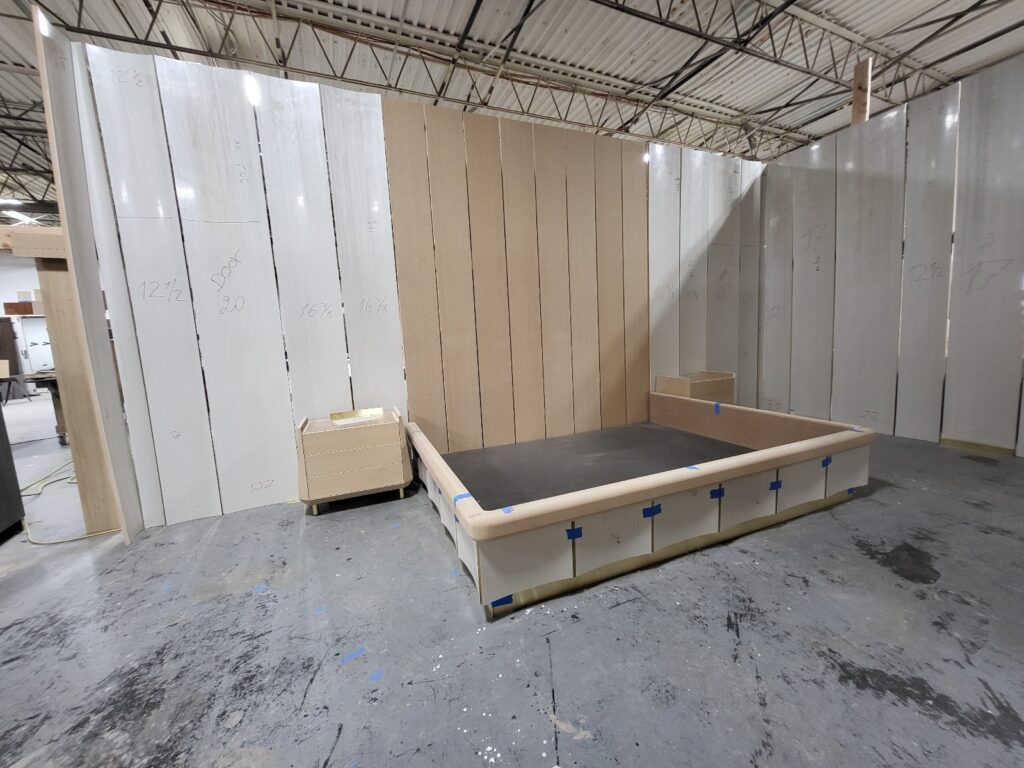
Upholstery for Oversized Bed Components
Large custom beds often include components that exceed standard furniture dimensions.
Tall headboards, wide architectural panels, oversized rails, and integrated bedroom systems require careful material planning and controlled upholstery methods.
For oversized work, we consider:
- Fabric width
- Seam locations
- Pattern repeats
- Handling during production
- Transport dimensions
- Modular assembly
- Final installation access
COM — Customer’s Own Material
Interior designers and clients frequently specify their own fabrics or leathers.
We can work with COM materials provided for the project, subject to suitability for the intended upholstery application.
Before production, we review:
- Material type
- Width
- Pattern repeat
- Direction
- Available yardage
- Durability
- Stretch
- Thickness
- Leather hide size and usable area

Upholstery Coordination With Headboards, Rails & Footboards
A complete custom bed may contain several separately fabricated upholstered components.
These components need to visually relate to one another after final assembly.
We coordinate:
- Fabric direction
- Seam alignment
- Welt position
- Padding thickness
- Rail-to-headboard transitions
- Footboard proportions
- Pattern placement
- Finished edge details
This coordination allows the individual components to read as one unified piece after installation.
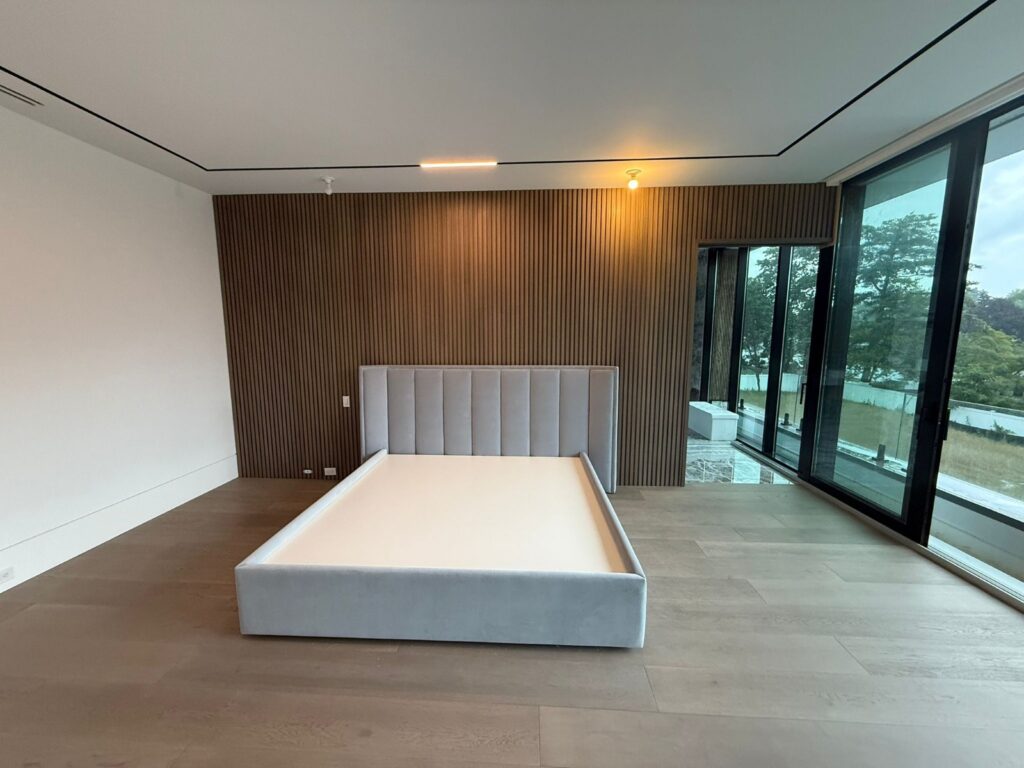
Upholstery for Architectural Bed Systems
Some upholstered beds are integrated with surrounding architectural elements rather than functioning as independent furniture.
The upholstery process may need to coordinate with:
- Upholstered wall panels
- Wood wall systems
- Built-in nightstands
- Lighting
- Electrical outlets
- Millwork
- Floating bedside components
- Floor-to-ceiling headboard systems
Quality Control & Final Finishing
Before upholstered components leave the workshop, we inspect the finished work for consistency and alignment.
Quality-control checks may include:
- Seam alignment
- Fabric tension
- Pattern placement
- Welt consistency
- Tufting depth
- Channel spacing
- Edge definition
- Foam profile
- Surface cleanliness
- Component dimensions
Final detailing is completed before the pieces are wrapped and prepared for delivery.
From Upholstery to Installation
Upholstery is one stage of the complete bed manufacturing process.
The workflow typically includes:
- Design and project planning
- Structural construction
- CNC fabrication where required
- Upholstery and finishing
- Delivery and installation
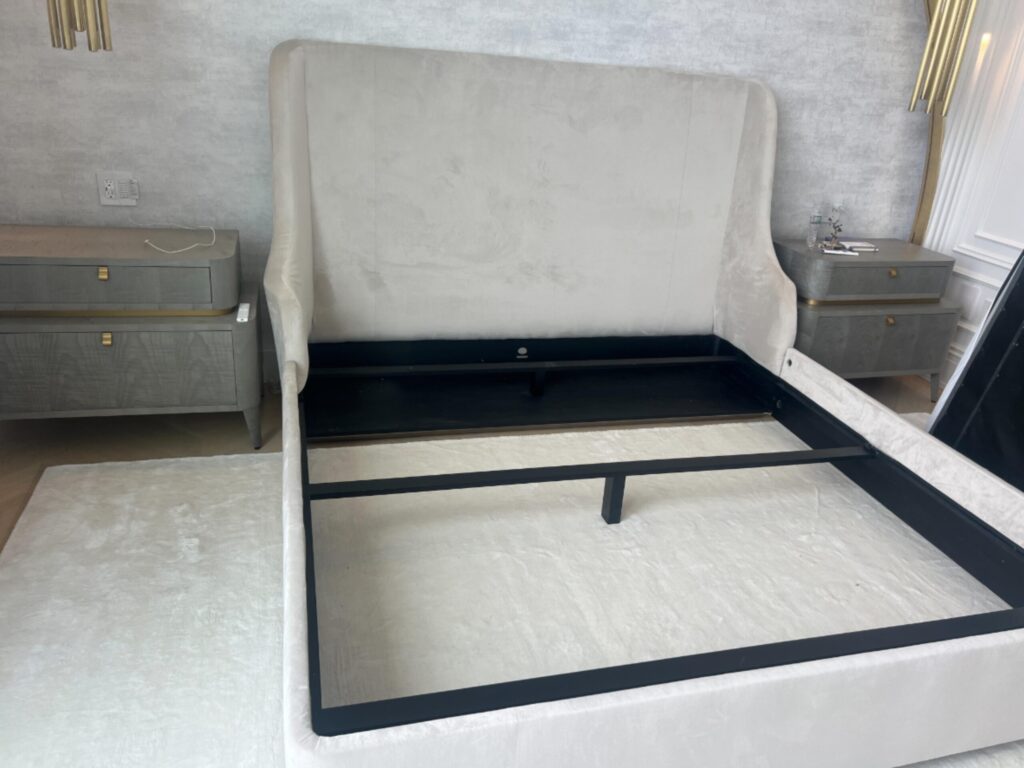
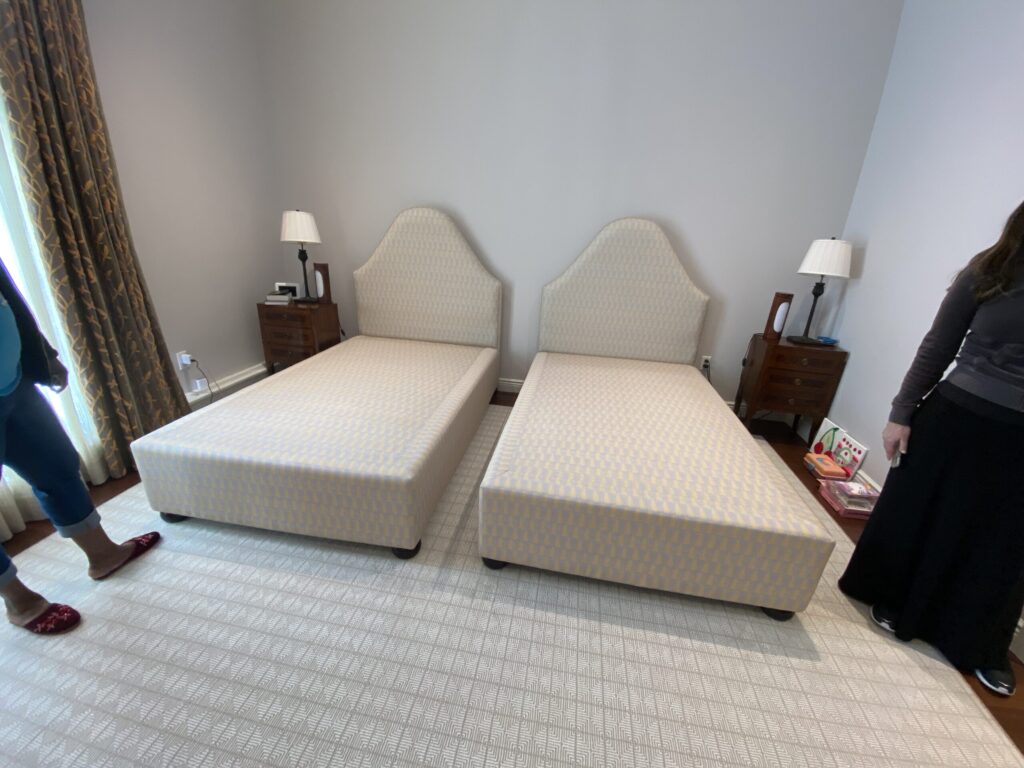
Once upholstery is complete, the finished components move to the installation stage.
Continue the Bed Manufacturing Process
You can also review the complete manufacturing sequence on our Bed Builder page.
Looking for Finished Upholstered Bed Styles?
This page explains the upholstery process.
If you are choosing a finished upholstered bed style, configuration, fabric treatment, or complete bed design, visit our Custom Upholstered Beds page.
That page covers the finished product rather than the manufacturing process.
Start a Custom Bed Project
If you are planning a custom upholstered bed, architectural headboard, or integrated bedroom system, send us your drawings, dimensions, fabric specifications, or inspiration images.
Our team can coordinate structural fabrication, upholstery, finishing, and installation as part of the complete project.