Cushion Materials Guide
Foam, Down, Feather, Spring‑Down & Outdoor Cushion Materials Explained
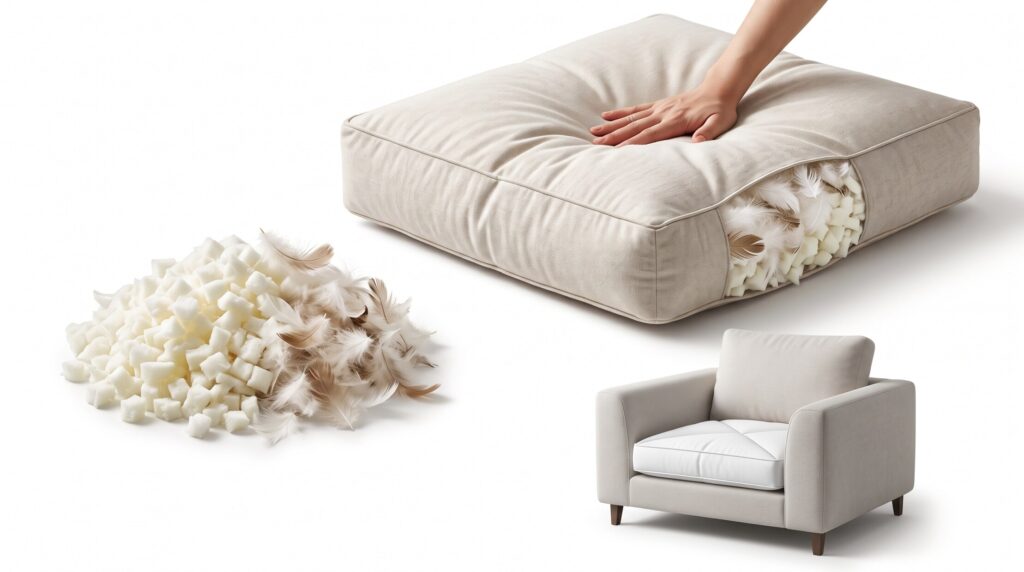
A Complete Guide to Cushion Foams, Fills, Constructions, and Comfort Levels
This guide is designed to help you understand the materials inside your cushions — and why some
cushions feel luxurious for years while others sag within months. We cover foam types, down and
feather blends, premium cushion constructions, firmness levels, cushion profiles, and indoor vs.
outdoor materials.
Use this as your reference when planning a cushion replacement or restoration project.
Foam Types for Cushions
Not all foam is created equal. Density, ILD (firmness), and foam type determine how a cushion feels
and how long it lasts. Below are the most common foam types used in seating.
Standard Polyurethane Foam
Density: ~1.2–1.5 lb/ft³ • Lifespan: 6–18 months
Entry‑level foam often found in low‑cost furniture and online cushions. Feels fine at first,
but breaks down quickly and develops permanent sag.
High‑Density (HD) Foam
Density: ~1.8–2.2 lb/ft³ • Lifespan: 2–4 years
A step up from standard foam. Common in mid‑range retail sofas. Better support and durability,
but still not true upholstery‑grade for long‑term daily use.
High‑Density Upholstery Foam
Density: ~2.5–2.8 lb/ft³ • Lifespan: 7–10 years
Professional upholstery‑grade foam used in high‑end furniture. Excellent support, comfort,
and long‑term performance for daily seating.
High‑Resilience (HR) Foam
Density: ~2.8–3.0 lb/ft³ • Lifespan: 10–15 years
Premium foam with superior resilience, bounce‑back, and comfort. Often used in luxury seating
and paired with down wraps for high‑end cushions.
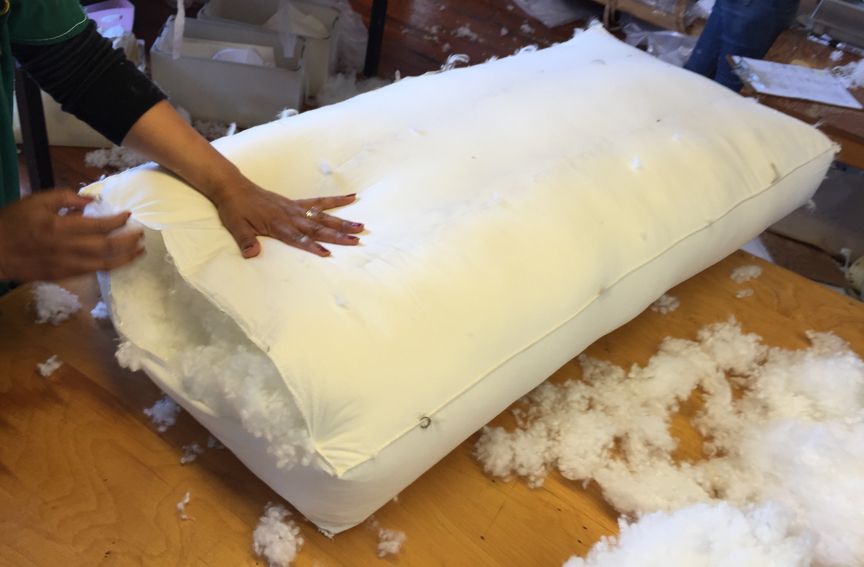
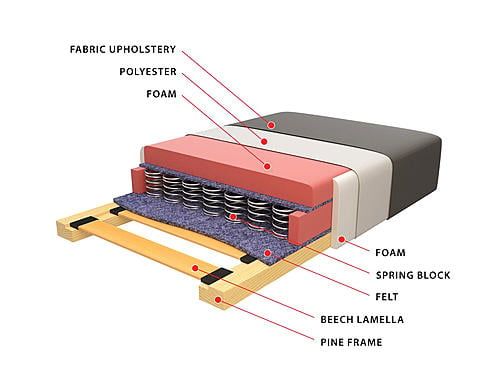
Foam Firmness & ILD (How Firm Is “Firm”?)
Foam firmness is measured in ILD (Indentation Load Deflection). Higher ILD = firmer foam.
For seating, we typically work within a range that balances comfort and support.
- Soft: ~18–25 ILD — plush, best for backs and light‑use seating
- Medium: ~26–35 ILD — balanced comfort and support for most seats
- Firm: ~36–45 ILD — supportive, best for heavier use or firmer preference
Down & Feather Cushion Fills
Down and feather fills are used for luxury comfort, especially in back cushions and premium seat
constructions. The blend ratio affects softness, loft, and support.
Feather
Provides structure and weight. More supportive than pure down but can feel “crunchier” if used alone.
Often blended with down for balanced comfort.
Down
Soft clusters from the underlayer of birds. Extremely soft, light, and luxurious. Pure down feels
cloud‑like but requires regular fluffing and maintenance.
10/90 Feather‑Down Blend
10% down, 90% feather. Structured, supportive, and crisp. Ideal for back cushions and decorative pillows.
25/75 & 50/50 Blends
Higher down content for more softness and loft. 25/75 is balanced; 50/50 is very plush and luxurious.
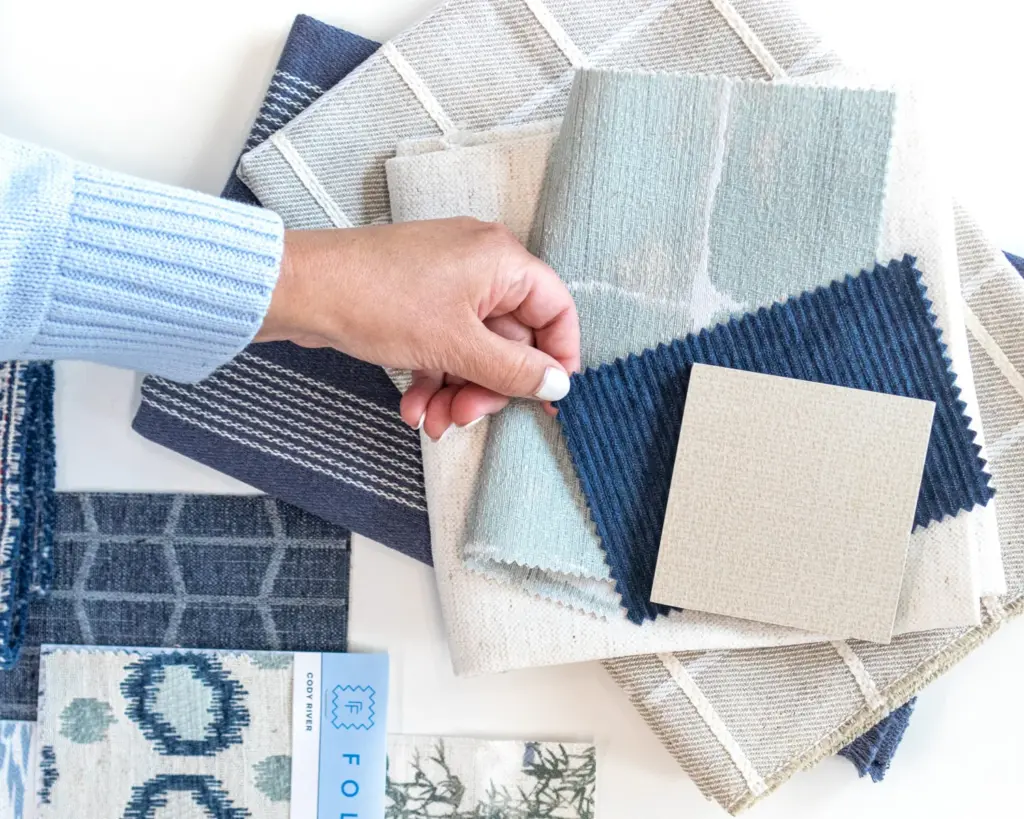
Downproof Ticking
Down and feather fills must be contained in downproof ticking — a tightly woven fabric
that prevents feathers from poking through your cushion covers.
- Prevents feather leakage
- Maintains cushion shape and loft
- Protects your upholstery fabric
- Essential for any quality down/feather cushion
Premium Cushion Constructions
Beyond basic foam or feather inserts, premium cushion constructions combine multiple materials
to achieve specific comfort and performance goals.
Spring‑Down Cushions
Coil spring unit encased in foam and wrapped in down/feather. Buoyant, responsive, and extremely durable.
Common in high‑end sofas and club chairs.
HR Foam Core + Down Wrap
High‑Resilience foam core wrapped in a down/feather envelope. Firm support with a soft, luxurious top feel.
Ideal for daily‑use seating.
Micro‑Plush Cushion Cores
Ultra‑soft, cloud‑like comfort with high loft retention. Often used in back cushions and deep seating.
All‑Down & All‑Feather Backs
Pure down or pure feather fills for maximum softness or structured loft. Require regular fluffing but
deliver a distinctly luxurious feel.
Cushion Profiles & Shapes
The profile of a cushion affects both comfort and appearance. We can build or replicate a wide range
of cushion shapes and profiles.
- Boxed Cushions: Straight, squared edges with top and bottom panels and boxing.
- Crowned Cushions: Slightly domed top for a fuller, more luxurious look and feel.
- Tapered Cushions: Front higher than back, often used for ergonomic seating.
- Waterfall Front: Fabric flows smoothly over the front edge without a seam.
- Custom Shapes: L‑shapes, trapezoids, radius corners, bay window cushions, and more.
Indoor vs Outdoor Cushion Materials
Indoor Cushion Materials
- High‑density or HR foam cores
- Down and feather blends
- Premium Dacron wraps
- Downproof ticking for feather fills
Outdoor Cushion Materials
- Dryfast (reticulated) foam for drainage
- Outdoor Dacron for loft and shape
- Mesh liners for breathability
- Outdoor performance fabrics and marine‑grade options
For service and project details, visit our Cushion Replacement Service page.
Cushion Material Lifespan Comparison
| Material / Construction | Typical Lifespan | Support | Softness |
|---|---|---|---|
| Standard Poly Foam | 6–18 months | Low | Medium |
| High‑Density Foam | 2–4 years | Medium | Medium |
| High‑Density Upholstery Foam | 7–10 years | High | Medium |
| HR Foam | 10–15 years | High | Medium‑High |
| HR Foam + Down Wrap | 8–12 years | High | High |
| Spring‑Down Cushion | 10–15+ years | Very High | High |
| All‑Down Back Cushion | 5–8 years* | Low | Very High |
*Assumes proper maintenance, regular fluffing, and appropriate usage.
Need Help Choosing the Right Cushion Materials?
If you’re not sure which foam, down blend, or cushion construction is right for your project,
we can recommend the best combination based on how you use your furniture, your comfort preferences,
and how long you want your cushions to last.
- Photos of your existing cushions and furniture
- Measurements (length, width, thickness)
- Indoor or outdoor use
- Your preferred comfort level (soft, balanced, firm)
Get a Cushion Materials Consultation
Call: 201‑944‑2282
Custom Cushion Replacement & Core Options
Explore core materials, density selections, and specific seating replacements: